
WELCOME BONUS 300%
UP TO €2000 + 100
FREE SPINS
UP TO €2000 + 100
FREE SPINS
Home → Games
Casino games at Starda Casino
Double Down: Doubling Your Bet After Two Cards
The Double Down option in Blackjack allows a player to double their initial bet after receiving their first two cards. This move is typically made when the player believes they have a strong hand and can win with a single additional card. The Blackjack Ein Deck game, with classic rules and a 3:2 payout, features a very low house edge of 0.15%. This low edge makes strategic decisions, such as when to Double Down, more impactful for the player.
When considering a Double Down, it is crucial to assess the dealer's upcard. The Blackjack Ein Deck game, with its 0.15% house edge, provides a favourable environment for strategic play. Understanding the potential outcomes based on the dealer's visible card is paramount to making an informed decision. The house edge of 0.15% in this specific variant means that, on average, players can expect to retain 99.85% of their wagers over the long term.
The decision to Double Down can significantly affect a player's potential winnings. In the Blackjack Ein Deck game, where the house edge is a mere 0.15%, a well-timed Double Down can maximise profit. For instance, doubling a bet when holding a hard 11 against any dealer upcard from 2 to 10 can lead to increased payouts. However, incorrect use of this option can also increase losses, especially when facing a dealer's strong hand.
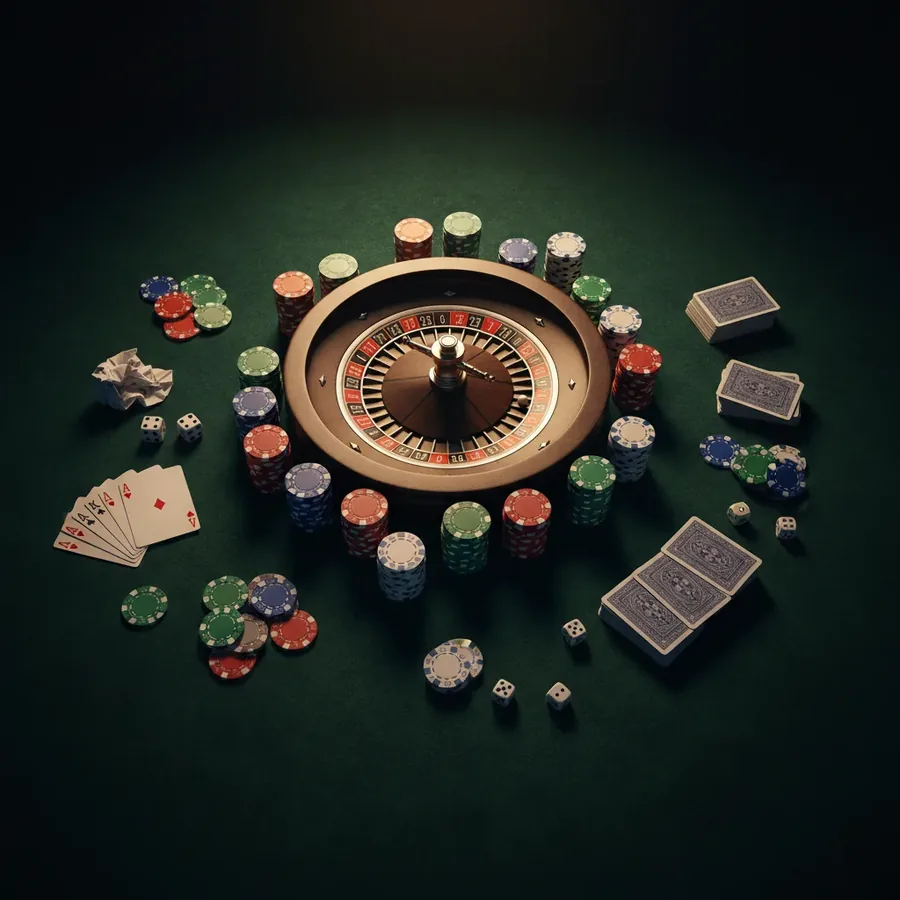
Before Double Down: read the open dealer card
Examining the dealer's visible card is a fundamental step before deciding to Double Down in Blackjack. In games like Blackjack Ein Deck, which boasts a 0.15% house edge, this observation is critical. The dealer's upcard provides vital information about the likelihood of the dealer busting or achieving a strong hand. For example, a dealer showing a 2 through 6 is more likely to bust than a dealer showing a 7 through Ace.
The impact of the dealer's open card on the Double Down decision is substantial, especially in games with low house edges like Blackjack Ein Deck (0.15% house edge). If the dealer shows a card that suggests a weak hand, such as a 5 or 6, a player might be more inclined to Double Down, anticipating the dealer will exceed 21. This strategic approach is a key component of basic strategy in Blackjack.
A player's potential gain or loss can be significantly influenced by their assessment of the dealer's open card when considering a Double Down. In a game with a 0.15% house edge, such as Blackjack Ein Deck, correctly interpreting the dealer's hand can lead to more profitable outcomes. For instance, doubling down on a soft 16 (Ace-5) against a dealer's 7 is a standard play that leverages the dealer's higher probability of busting.
Video Poker: check payout table before betting
Before placing any bets on Video Poker, a player should always consult the payout table. For Jacks or Better, the difference between an 8/5 and a 9/6 payout table can be significant, impacting the Return to Player (RTP). An 8/5 Jacks or Better game has an RTP of 97.29%, while a 9/6 version offers a higher RTP of 99.54% with optimal strategy. This means the house edge changes from 2.71% to 0.46%.
The figures on a Video Poker payout table dictate the game's profitability for the player over time. For example, the '9/6' in Jacks or Better 9/6 refers to the payouts for a Full House (9 coins) and a Flush (6 coins) for a one-coin bet. A higher payout for these hands, as seen in the 9/6 variant compared to the 8/5 variant, directly increases the RTP and reduces the house advantage.
Understanding the payout structure is essential for maximising potential returns in Video Poker. A game like Deuces Wild — Full Pay offers a theoretical RTP of 100.76%, resulting in a negative house edge of -0.76%, meaning players have a long-term advantage if played optimally. However, this is an exception, and most Video Poker variants have a house edge, making the payout table a critical tool for players.
Blackjack flow: cards, decision, payout 3:2
The standard flow of a Blackjack hand involves receiving cards, making a decision, and then receiving a payout. In Blackjack variants that offer a 3:2 payout for a natural Blackjack, the game provides a better return than a 6:5 payout. For example, Blackjack Ein Deck with classic rules and a 3:2 payout has a house edge of 0.15%, making it a favourable option for players.
Following the initial deal of two cards to the player and two to the dealer, the player makes their decision: hit, stand, double down, or split. The payout structure, particularly the 3:2 for a Blackjack, significantly influences the game's overall house edge. A game with a 0.15% house edge, like the mentioned Blackjack Ein Deck variant, suggests that strategic play is rewarded more significantly.
The final stage is the payout, which is determined by the player's hand compared to the dealer's. A natural Blackjack often pays 3:2, meaning a €10 bet would yield €15 profit, plus the original €10 bet returned. This payout ratio is crucial, as a shift to 6:5 can increase the house edge substantially, impacting the player's long-term RTP, even in games like Blackjack 6 Decks where the edge is 0.46%.
Video Poker 9/6: What the Two Numbers Mean
The '9/6' in Video Poker, specifically for Jacks or Better, refers to the coin payouts for two key hands: a Full House and a Flush. In a 9/6 Jacks or Better game, a Full House pays out 9 coins for every 1 coin wagered, and a Flush pays 6 coins for every 1 coin wagered. This specific payout structure is associated with a higher Return to Player (RTP).
Comparing the '9/6' payout table to others highlights its importance for players seeking better odds. The Jacks or Better 9/6 variant, when played with optimal strategy, offers an RTP of 99.54%, resulting in a house edge of only 0.46%. This is considerably better than the 8/5 version, which has an RTP of 97.29% and a house edge of 2.71%.
The difference between a 9/6 and an 8/5 payout table can translate into substantial long-term gains or losses for a player. A player consistently playing Jacks or Better 9/6 optimally will, over time, retain a much larger portion of their wagers compared to someone playing an 8/5 machine. This underscores the necessity of checking and understanding the payout table before engaging in Video Poker.
Game categories at a glance
| Category | Examples | Stakes From | Highlight |
|---|---|---|---|
| Slots | Gates of Olympus, Esqueleto Explosivo 2, Big Bad Wolf Megaways | 0,10 EUR | thousands of titles |
| Table games | Roulette, Blackjack, Baccarat | 0,50 EUR | classic rules |
| Live casino | Baccarat Squeeze, XXXtreme Lightning Roulette | 0,20 EUR | real dealers |
| Jackpot games | Mega Moolah, Divine Fortune, Age of the Gods | 0,20 EUR | progressive pools |
| Instant games | Aviator, Plinko, Mines | 0,10 EUR | fast rounds |
| Video poker | Jacks or Better, Deuces Wild | 0,25 EUR | strategy based |
37 vs. 38 Sectors: One Zero Difference
European Roulette features 37 sectors, including a single zero, whereas American Roulette incorporates 38 sectors with both a single and a double zero. The European version offers a house edge of 2.70%, stemming from its 37 sectors, while the American variant presents a significantly higher house edge of 5.26%. This difference is directly attributable to the additional '00' sector.
The payout for a straight bet remains 35:1 in both European and American Roulette, but the added sector in the American version means this payout covers fewer outcomes relative to the total number of pockets. This fundamental difference in table layout directly impacts the player's long-term return.
For players, the European Roulette table with its single zero offers a demonstrably better RTP of 97.30% compared to the American Roulette's 94.74%. This means that, on average, less money is retained by the casino over extended play, making the single-zero wheel more favorable.
Double Down: double bet, only one card
In Blackjack, the Double Down move allows a player to double their initial bet after receiving their first two cards, in exchange for receiving only one additional card. This strategic option is available on any two-card hand, providing a potential for increased winnings on favorable situations.
The ability to double down on any two-card hand, as seen in Blackjack 6 Decks (S17, DAS, DOA), can significantly alter the game's mathematics. This flexibility, combined with other rules like Double After Split (DAS) and Double on any two cards (DOA), contributes to a lower house edge.
Understanding when to employ the Double Down is crucial for optimal play. In Blackjack 6 Decks, with a house edge of 0.46%, strategic use of doubling down can help players capitalize on advantageous hands and potentially increase their overall RTP.
Split, Double, and Surrender: Three Decisions Explained
Blackjack offers players several strategic decisions beyond hitting or standing, including splitting pairs, doubling down, and surrendering. Splitting allows a player to divide a pair into two separate hands, while doubling down doubles the bet for one more card. Surrender, when available, permits a player to forfeit half their bet.
The Blackjack Surrender rule, specifically Late Surrender, allows a player to give up half their stake after the dealer checks for blackjack. This rule modification can improve the player's RTP by approximately 0.08 percentage points, reducing the house edge from its base value. However, early surrender offers a more substantial benefit.
These strategic options, particularly in games like Blackjack 6 Decks with a 0.46% house edge, are vital for players aiming to minimise losses. The ability to split pairs, double down on strong hands, or surrender weak ones against a dealer's upcard are key components of basic strategy, impacting overall profitability.
Before sitting down: check table bet limits
Online casino tables often display minimum and maximum bet limits clearly before a player joins. For instance, a game like European Roulette might have a minimum bet of 0.10 € and a maximum bet of 100 €, ensuring accessibility for different bankrolls. Always review these limits to ensure they align with your playing budget.
These limits are not uniform across all games or even within the same game type. For example, while one Blackjack table might allow bets from 1 € to 500 €, another could range from 0.50 € to 1,000 €. This variation is important for players planning their session length and strategy.
Adhering to table bet limits is fundamental to responsible gambling. Exceeding them can lead to rapid depletion of funds, especially in games with higher volatility. Players should select tables where their chosen betting strategy fits comfortably within the established minimum and maximum wager amounts.
Straight, Split, and Corner in direct comparison
In Roulette, a Straight bet on a single number pays 35:1, offering the highest payout for the lowest probability of winning. A Split bet covers two adjacent numbers and pays 17:1, balancing risk and reward. These bets are fundamental to the game's betting structure.
A Corner bet in Roulette covers four numbers and pays 8:1. This payout reflects the increased chance of a win compared to a Straight bet, but less so than bets covering larger groups of numbers. The payouts are designed to reflect the odds of landing on the chosen pockets.
Comparing these bets highlights the varying house edge across different wager types in Roulette. While a Straight bet on European Roulette (RTP 97.30%) pays 35:1, the inherent 2.70% house edge applies to all bets. American Roulette, with its lower RTP of 94.74%, offers the same payouts but with a steeper disadvantage.
Soft 17: the Ace counts 11 or 1
In Blackjack, the Ace holds dual value, serving as either 1 or 11. This flexibility is crucial for achieving optimal hand totals. For instance, an Ace combined with a 6 can form either a soft 17 (11+6) or a hard 7 (1+6).
When the dealer's hand includes an Ace and a 6, resulting in a soft 17, the rules dictate their action. In Blackjack variants where the dealer stands on soft 17 (S17), this hand is treated as a static 17. This is a favourable rule for players, contributing to a lower house edge.
The RTP for Blackjack with S17 rules and optimal strategy is 99.54%, with a house advantage of 0.46%. This contrasts with dealer hit on soft 17 (H17) rules, which typically present a slightly higher house edge and a consequently lower RTP for the player.
RNG Roulette vs. Live Table: Four Clear Differences
European Roulette features a single zero and numbers 1 through 36, totalling 37 sectors. The payout for a straight-up bet is 35:1, resulting in a consistent house edge of 2.70%. This mathematical structure applies regardless of the bet type placed on the table.
American Roulette, conversely, includes both a single zero and a double zero (00), expanding to 38 sectors. Despite maintaining the same payout structure as European Roulette (35:1 for straight-up bets), the addition of the double zero significantly increases the house edge to 5.26%.
This difference in house edge means that for every 100 currency units wagered on European Roulette, theoretically 97.30 currency units are returned to players over the long run. In American Roulette, this RTP drops to 94.74 currency units for the same amount wagered.
Straight 35:1 Instead of 36:1: Where House Edge Originates
The payout for a single number bet in Roulette, known as a 'Straight' bet, is typically 35:1. This means a 1 unit bet can win 35 units, plus the original stake is returned. This payout is standard across many Roulette variants, including European Roulette.
The house edge in Roulette fundamentally stems from the payout structure relative to the number of possible outcomes. In European Roulette, with 37 sectors, a true payout for a single number bet would need to be 36:1 to eliminate the house edge. The 35:1 payout creates the 2.70% advantage for the casino.
This deviation from a 'fair' payout is what generates the house advantage, ensuring the casino retains a percentage of all wagers over time. For example, if 37 bets of 1 unit are placed on each number, 37 units are wagered, and only 36 units are paid out on the winning number (35 units profit + 1 unit stake), leaving 1 unit for the house.
Multihand Blackjack with Up to 5 Hands
Multihand Blackjack allows players to play multiple hands simultaneously against the dealer. This format can significantly increase the number of decisions made within a given timeframe. Some variants permit playing up to 5 hands concurrently per round.
Each hand in Multihand Blackjack operates independently, with its own set of cards and potential outcomes. While this can accelerate the pace of play, it also means that the total amount wagered per round can be substantially higher, especially when playing the maximum number of hands.
Playing 5 hands of Blackjack, for instance, means the player is exposed to the game's inherent house edge 5 times per round. With a house advantage of 0.46% for Blackjack with 6 decks and optimal strategy, playing multiple hands magnifies the potential for short-term variance and impact on the player's bankroll.
Table Games Often Count Only 10 Percent
When a welcome bonus is offered, such as 300% up to €2,000 plus 100 free spins, the wagering requirements dictate how much must be bet before bonus funds can be withdrawn. The contribution of different game types to meeting these requirements varies.
Table games like Baccarat, Roulette, and Craps typically contribute only 10% towards the wagering requirements. This means that for every €100 wagered on these games, only €10 counts towards clearing the bonus. This is a common practice across many online casinos.
For example, to meet a wagering requirement of €4,000 (e.g., from a €2,000 bonus with a x20 wagering requirement), a player would need to wager €40,000 on slots (contributing 100%), but a significantly higher €400,000 on table games (contributing 10%) to achieve the same turnover.
Contact
Live - online chat
Banking



Providers







Starda Casino 2026